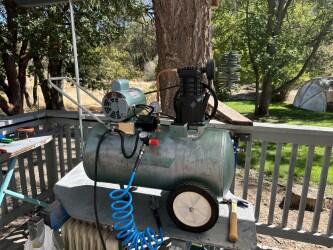

Pulley Size & RPM Ratio Calculator
Pulley Size & RPM Ratio / Compressor Speed Calculator
Determining Pulley Diameters & Shaft Speeds
This calculator solves pulley speed and size problems to determine pulley diameters and shaft rotation speeds in belt-driven mechanical systems. This calculator is used when working on belt-driven systems like air compressors, fans, pumps, and other industrial machinery to estimate motor or compressor speed (RPM), or to size pulleys for specific speed ratios.
The RPM of a driver pulley or driven pulley can be determined if both pulley diameters and either a known driver pulley speed or desired driven pulley output speed are provided. Alternatively, if the driven and driver pulley speeds are provided alongside one pulley diameter, the proper companion pulley diameter can be calculated.
By entering any three of the following values – motor RPM, motor pulley outside diameter, pump flywheel outside diameter, or pump RPM – the calculator solves for the missing one, using the standard pulley speed ratio formula:
- RPM₁ × Pulley Diameter₁ = RPM₂ × Pulley Diameter₂
Which can then be solved for any of the four values:
- Solve for RPM₁ (Motor RPM):
- RPM₁ = RPM₂ × Pulley Diameter₂ / Pulley Diameter₁
- Solve for Pulley Diameter₁ (Motor Pulley Outside Diameter):
- Pulley Diameter₁ = RPM₂ × Pulley Diameter₂ / RPM₁
- Solve for RPM₂ (Pump Flywheel Outside Diameter):
- RPM₂ = RPM₁ × Pulley Diameter₁ / Pulley Diameter₂
- Solve for Pulley Diameter₂ (Pump RPM):
- Pulley Diameter₂ = RPM₁ × Pulley Diameter₁ / RPM₂
What This Calculator Helps You Do:
- Solve for unknown RPM or pulley diameters using belt-drive ratio formulas
- Estimate compressor pump speed (RPM) based on motor pulley size and motor RPM to avoid over-speeding on belt-driven setups
- Design or modify pulley systems to achieve target speeds for mechanical equipment
- Evaluate whether a pulley swap will increase or decrease the driven shaft RPM
How to Use This Calculator:
To use the calculator, enter any three of the following:
- Motor RPM – The rotational speed of the driving shaft (e.g., electric motor).
- Motor Pulley Outside Diameter – Diameter of the pulley attached to the motor shaft.
- Pump Flywheel Outside Diameter – Diameter of the pulley attached to the driven shaft (e.g., compressor pump).
- Pump RPM – Target or measured speed of the driven equipment.
The calculator will automatically compute the missing value based on the pulley ratio equation.
When to Use This Calculator:
- When setting up a new belt-driven air compressor or fan system
- When replacing or resizing pulleys to change output speed
- To calculate compressor speed
- To check if a pulley change will exceed RPM ratings
- When troubleshooting speed issues caused by incorrect pulley ratios
- To plan speed changes without requiring a new motor or compressor
What to Do With the Results:
Once calculated, use the RPM or pulley size result to:
- Select the correct pulleys for your desired speed
- Prevent over-speeding equipment like compressor pumps or fans
- Improve energy efficiency by optimizing motor speed-to-load ratios
When sizing pulleys, remember, pulley diameter and RPM are inversely proportional: if the pulley gets bigger, the RPM gets slower, and as a result, torque increases, and the reverse is true, the smaller the pulley, the higher the RPM, and the lower the torque. Motor torque limits should be considered if pulleys are changed and a much larger pulley is used to reduce the risk of motor overheating or failure.
Need the Right Pulleys or Belt for the Job?
We carry a wide range of pulleys and V-belts to suit nearly any size setup or needed RPM speed. You can also use our other calculators to determine belt length and center-to-center mounting distance, the other essential elements of a properly functioning belt-driven system.
Visit our resource library to see all calculators and other resources.
Disclaimer: This calculator is provided for general informational purposes only. While we strive for accuracy, results depend on the information you enter and may not reflect all real-world conditions. This tool and any related materials are provided “as-is” without warranties of any kind. Always verify measurements and specifications before purchasing, installing, or operating equipment. We are not responsible for any damages or issues arising from use of this information.